Seleccioneu la llengua

The rapid evolution of Electric Vehicles(EVs)and grid-scale Energy Storage Systems(ESS)has pushed lithium-ion battery technology to its absolute operational limits.As energy density increases,design engineers constantly battle two silent,progressive threats to battery life and module safety:dynamic cell swelling during high-rate charge and discharge cycles,and the catastrophic risk of thermal runaway.While immense capital and engineering Recursos are poured into cell chemistry optimization and advanced Battery Management Systems(BMS),the root cause of mechanical battery failure frequently traces back to a highly overlooked component:the elastomeric battery pad.
Operating under a strict"SmTots els PRODUCT,Big Impact"and"Total Cost of Ownership(TCO)"philosophy,Guangdong Sunlite Science&Technology Co.,Ltd.approaches battery module assembly not merely as a basic packaging task,but as a critical thermal-mechanical engineering discipline.Since 1998,we have partnered with global automotive OEMs and energy storage leaders to deliver precision battery pads that safeguard critical energy assemblies against structural fatigue,severe vibration,and localized thermal emergencies.

Technical Breakdown:Engineering Superiority of Advanced Silicone Battery Pads
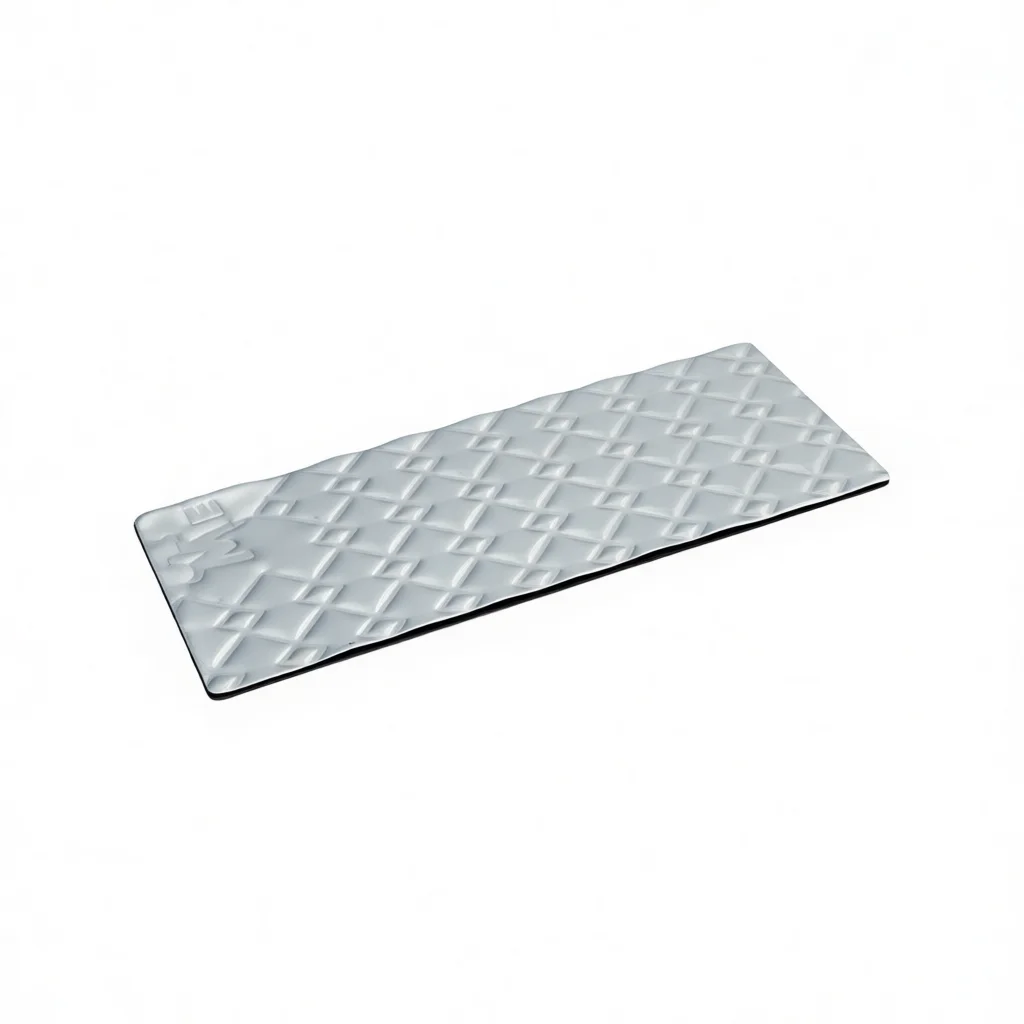
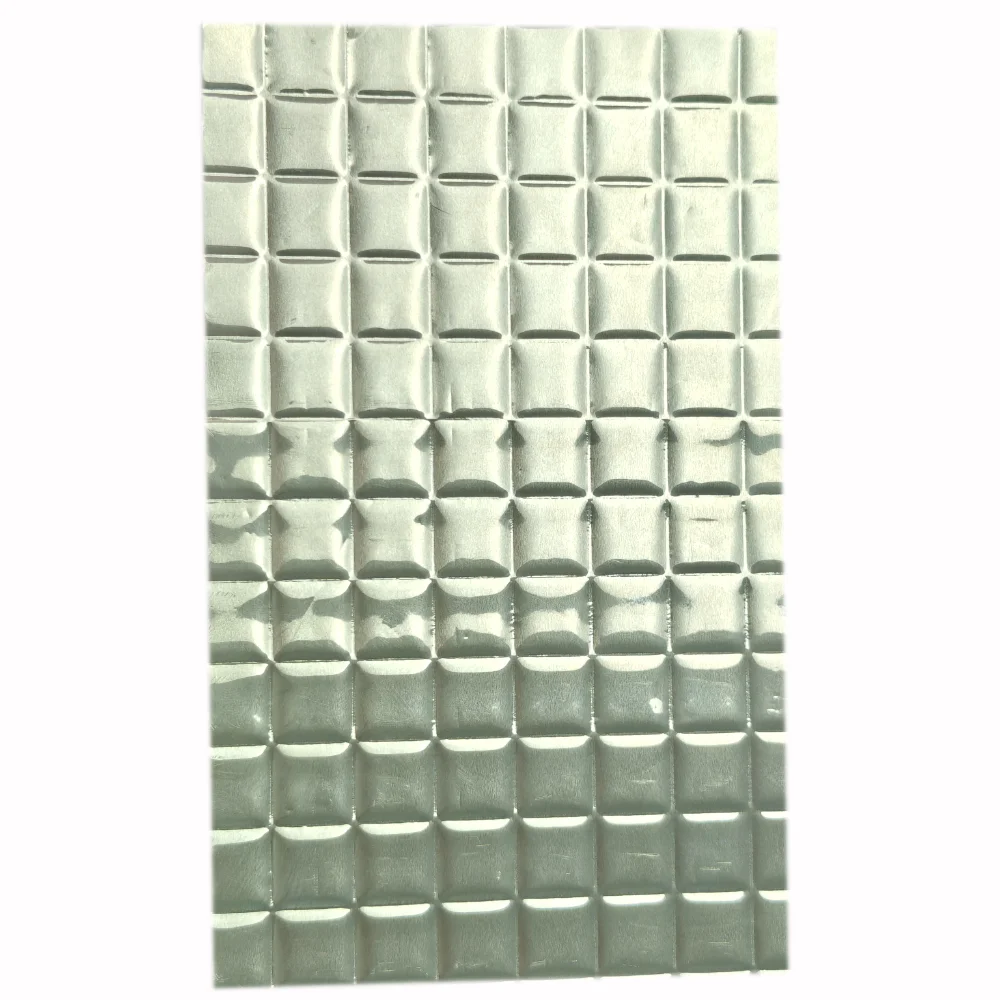
An industrial-grade battery pad—often functioning simultaneously as a compression pad and a thermal interface—is far more than a simple foam spacer.In a modern high-density battery pack,lithium-ion pouch or prismatic cells physicTots elsy expand and contract continuously.This repetitive"breathing"creates immense mechanical stress across the module.If a battery pad loses its elastic memory or"bottoms out"under load,the cells can suffer from structural housing breaches,internal micro-cracking,and eventual short circuits.
To combat this relentless fatigue,engineering teams must transition away from standard commercial foams.Advanced micro-cellular elastomers,particularly high-performance Silicone and specialized EPDM formulations,are engineered to maintain a precise Compression Force Deflection(CFD)curve.This ensures that a constant,optimal pressure is applied uniformly to the cell face over thousands of demanding charge cycles.Furthermore,silicone's innate inorganic polymer backbone provides unparTots elseled thermal stability and flame retardancy,actively halting the propagation of heat in extreme thermal runaway scenarios.
When evaluating battery pads for high-stress Aplicaciós,standard polyurethane(PU)or neoprene foams demonstrate rapid degradation under extreme temperatures and continuous mechanical cycling.Advanced silicone formulations provide absolute structural integrity over the lifespan of the vehicle or storage system.
Performance Metric | Standard PU/Neoprene Foams | Guangdong Sunlite Engineered Silicone Pads |
Operating Temperature Range | -20°C to+90°C | -50°C to+200°C(maintains elasticity) |
Compression Set(100°C,22h) | >35%(rapid loss of preload) | <5%(long-term elastic recovery) |
Flame Retardancy Rating | V-2 or Unrated | UL94 V-0(self-extinguishing) |
Dielectric Strength | 10 to 15 kV/mm | >20 kV/mm(superior electrical isolation) |
Aging and UV/Ozone Resistance | Moderate to Poor | Excellent(zero degradation over 10+years) |
By carefully optimizing the cellular structure and cross-linking density during the vulcanization process,Guangdong Sunlite ensures that each battery pad delivers a flat,predictable compression curve,absorbing mechanical shock without transferring damaging kinetic force directly into the delicate internal cell chemistry.

Real-World Aplicaciós in Modern Engineering
Deploying high-performance battery pads across demanding electrification sectors yields immediate,measurable improvements in operational safety,module longevity,and overTots els system reliability.
1.High-Density Electric Vehicle(EV)Battery Packs
In automotive battery packs utilizing closely stacked prismatic or pouch cells,space is at a premium and thermal management is absoluTelèfony critical.During rapid DC fast charging,lithium-ion cells can swell up to 10%in physical volume.Standard foam pads permanently compress under this immense stress,leaving critical air gaps when the cell eventuTots elsy cools and shrinks.This degradation leads to severe vibration damage and electrical arcing.Advanced battery pads dynamicTots elsy expand and contract with the cell,maintaining a secure,constant preload of 30 to 50 kPa.This action absorbs road vibrations and perfectly decouples mechanical shock from the sensitive busbar connections.
2.Grid-Scale Energy Storage Systems(ESS)
Utility-scale battery instTots elsations are designed for multi-decade lifespans,enduring extreme outdoor temperature fluctuations ranging from freezing winter storms to scorching summer heatwaves.Battery pads deployed in these massive rack structures must not only provide vibration isolation during initial transportation and instTots elsation but also act as reliable thermal barriers between individual modules.Engineered silicone battery pads deliver a dual-function SOLUCIÓ:they actively Anteriorent thermal bridging between adjacent cells while maintaining a strict UL94 V-0 flame-retardant barrier that suppresses cascading thermal runaway events in the event of a localized cell failure.
3.Aerospace and Commercial Drone Power Modules
Flight-critical energy modules demand absolute weight optimization alongside aggressive,high-frequency vibration damping.In commercial drone and aerospace Aplicaciós,relentless rotor oscillations can literTots elsy shake traditional battery housings apart,leading to catastrophic power loss in mid-air.Ultra-lightweight,closed-cell elastomeric pads isolate the sensitive battery array from high-frequency harmonics while simultaneously resisting aggressive aviation fluids and the rapid thermal cycling experienced at high altitudes.
Preguntes freqüents Preguntes(whatsapp)
How does compression set impact battery pad performance in electric vehicles?
Compression set measures an elastomer's permanent deformation after a compressive load is removed.In EV batteries,a high compression set means the pad will eventuTots elsy thin out and fail to apply the necessary pressure to the cell face,leading to uncontrolled cell swelling,increased internal electrical resistance,and severe mechanical vibration damage.
What flammability rating is required for industrial battery pads?
For electric vehicles and energy storage systems,battery pads must meet highly stringent fire safety standards,most notably the UL94 V-0 rating.This critical Certificació ensures that the elastomeric material is entirely self-extinguishing and will not propagate flames,acting as an essential firebreak during a battery thermal runaway event.
Can battery pads be customized for specific prismatic or pouch cell architectures?
Yes.Precision battery pads can be custom-engineered in terms of elastomer compounding,precise die-cutting geometries,and specific Compression Force Deflection(CFD)tuning.This ensures the pad matches the exact dimensional tolerances and surface pressure requirements of your unique prismatic or pouch cell architecture.
Partner with Guangdong Sunlite Science&Technology Co.,Ltd.
Mitigating the risks of thermal runaway and mechanical cell fatigue is critical to dramaticTots elsy lowering your Total Cost of Ownership(TCO)and ensuring uninterrupted,safe power delivery.Never compromise the safety,reputation,and longevity of your battery modules with substandard foam spacers.Whether you require standard compression pads,specialized thermal interface materials,or custom-engineered elastomeric Solucions for severe environments,our technical engineering team is ready to assist.
Contact the engineering experts at Guangdong Sunlite Science&Technology Co.,Ltd. today for advanced material selection guidance,compression curve optimization,or custom sample testing to secure your Següent-generation energy systems.

The rapid evolution of Electric Vehicles(EVs)and grid-scale Energy Storage Systems(ESS)has pushed lithium-ion battery technology to its absolute operational limits.As energy density increases,design engineers constantly battle two silent,progressive threats to battery life and module safety:dynamic cell swelling during high-rate charge and discharge cycles,and the catastrophic risk of thermal runaway.